Head-to-Head: Thermal Master P3 Thermal Camera vs Agfaphoto Realimove Mc3X (Detailed Comparison)
Introduction to Modern Imaging: Beyond the Visible Spectrum
The world of portable imaging has expanded significantly beyond the traditional capture of visible light. Today, specialized sensors allow consumers and professionals alike to visualize the invisible, whether that is the heat signatures of a home's electrical panel or the hidden details of an industrial site. In the contemporary market, buyers are often faced with a choice between highly specialized diagnostic tools and versatile, entry-level thermal solutions. Two prominent examples in this space are the Thermal Master P3 Thermal Camera and the Agfaphoto Realimove Mc3X.
At first glance, these two devices might appear to serve the same purpose: providing a visual representation of temperature. However, they represent fundamentally different approaches to thermal imaging technology. The Thermal Master P3 is a high-performance, smartphone-attachable module designed for those who require high resolution and precision. Conversely, the Agfaphoto Realimove Mc3X is a standalone, ruggedized handheld device aimed at the entry-level market, prioritizing ease of use and portability over raw technical specifications. Understanding which of these tools fits a specific workflow requires a deep dive into leur sensor capabilities, software ecosystems, and physical ergonomics.
This comparison explores how these two devices stack up in real-world scenarios, ranging from home energy audits and HVAC troubleshooting to recreational use and automotive maintenance. By examining the technical nuances that separate a professional-grade peripheral from a consumer-grade standalone unit, we can determine which offers the best value for different types of users.
Detailed Product Analysis: Thermal Master P3 Thermal Camera
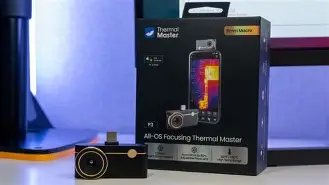
The Thermal Master P3 represents the new wave of "plug-and-play" thermal peripherals. By leveraging the processing power and high-resolution screen of a modern smartphone, the P3 focuses its entire hardware budget on the thermal sensor and lens assembly. This design choice allows it to punch significantly above its weight class in terms of image quality.
Sensor Resolution and Image Clarity
The heart of the Thermal Master P3 is its impressive thermal resolution. In the world of thermography, resolution is the single most important factor. While entry-level cameras often linger in the 80x60 or 160x120 range, the P3 typically offers a much higher pixel count, often reaching 256x192. This difference is not merely academic; it is the difference between seeing a "blob" of heat and seeing the individual components of a circuit board or the specific path of a radiant floor heating pipe. The high pixel density allows for sharper edges and more accurate temperature readings at a distance.
The Smartphone Advantage
Because the Thermal Master P3 connects via USB-C (or Lightning), it utilizes the smartphone app for all its functionality. This provides several advantages. First, the refresh rate is generally much smoother than standalone budget units, often operating at 25Hz. This makes "sweeping" a room for cold spots a seamless experience rather than a slide-show of jerky updates. Second, the app interface allows for advanced features like point temperature measurement, area averages, and high/low heat tracking that are easily manipulated via a touchscreen. Furthermore, capturing images and videos is instantaneous, and sharing those files via email or cloud storage is as simple as using any other phone app.
Build and Portability
The P3 is incredibly compact. It is roughly the size of a small box of matches, making it easy to carry in a pocket or a small EDC (Every Day Carry) bag. It is typically constructed from high-grade aluminum or reinforced polymer, providing a premium feel. However, because it relies on the phone for power and display, users must be mindful of their phone's battery life. Some users also find the physical connection to the phone a potential point of failure if the device is dropped while connected.
Detailed Product Analysis: Agfaphoto Realimove Mc3X
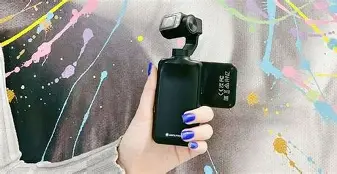
The Agfaphoto Realimove Mc3X takes a more traditional approach to thermal imaging. It is a standalone "all-in-one" device that includes its own screen, battery, and internal storage. While Agfaphoto is a name historically associated with film and consumer photography, the Mc3X is their play into the affordable thermal diagnostic market.
Standalone Versatility
The defining characteristic of the Mc3X is its independence. You do not need a phone, a specific app, or a compatible charging port to use it. This makes it an excellent choice for "grab-and-go" situations. In a dusty attic or a greasy engine bay, many users prefer not to expose their expensive smartphone to the environment. The Mc3X is built to be handled with gloves and used in rugged conditions where a delicate phone-and-dongle setup might be awkward.
Discover deals on Cameras & Photography — updated daily.
Browse Now →Interface and Display
The Mc3X features a built-in LCD screen. While the resolution of this screen is lower than that of a modern smartphone, it provides a clear enough view for general thermal assessments. The interface is usually controlled via physical buttons, which provide tactile feedback—an advantage in cold weather or when wearing work gloves. It follows a "point and shoot" philosophy, making it accessible to those who are not tech-savvy or who want a dedicated tool that stays in their toolbox.
Performance Limitations
Where the Mc3X sacrifices ground is in the technical specs. It typically features a lower-resolution thermal sensor compared to the P3. This results in a softer image where fine details can be lost. Additionally, the frame rate is often capped at around 9Hz. While 9Hz is standard for many entry-level thermal cameras due to export regulations and cost-saving, it can feel "laggy" during fast movement. For slow, deliberate inspections of a wall or a breaker box, this is perfectly adequate, but it lacks the fluid feel of the Thermal Master's output.
Pros and Cons
Thermal Master P3 Thermal Camera
- Pro: Superior thermal resolution provides crisp, detailed images that are suitable for professional report generation.
- Pro: High 25Hz refresh rate ensures a smooth viewing experience and easier detection of transient thermal events.
- Pro: Integration with smartphone apps allows for easy data logging, analysis, and instant cloud sharing.
- Pro: Extremely compact and lightweight, adding virtually no bulk to a professional's kit.
- Con: Dependent on a host device; if your phone is dead or the port is damaged, the camera is unusable.
- Con: The physical connection can be fragile; accidental bumps to the phone can stress the USB-C or Lightning connector.
Agfaphoto Realimove Mc3X
- Pro: Fully standalone design means it is always ready to work without needing to pair or connect to a phone.
- Pro: More durable for industrial environments where exposing a smartphone is risky or impractical.
- Pro: Tactile physical buttons are easier to operate while wearing protective gear or in harsh weather.
- Pro: Dedicated internal battery ensures you aren't draining your primary communication device during a long audit.
- Con: Significantly lower resolution leads to "pixelation" and difficulty identifying small components.
- Con: Lower refresh rate (9Hz) results in a stuttering image during movement.
- Con: Transferring files requires a microSD card or manual cable connection to a computer, which is less convenient than app-based sharing.
Head-to-Head Comparison Table
| Feature | Thermal Master P3 | Agfaphoto Realimove Mc3X |
|---|---|---|
| Device Type | Smartphone Attachment (Module) | Standalone Handheld |
| Thermal Resolution | High (e.g., 256 x 192) | Entry-Level (Lower pixel count) |
| Frame Rate | High (Up to 25Hz) | Standard (9Hz) |
| Display | Smartphone Screen (OLED/LCD) | Built-in 2.4" to 3.2" LCD |
| Connectivity | USB-C / Lightning | Standalone (microSD for storage) |
| Best Use Case | Professional audits, electronics, high-detail work | Rugged DIY, quick checks, general troubleshooting |
| Power Source | Powered by Phone | Internal Rechargeable Battery |
Real-World Use Cases and Buyer Considerations
When choosing between the Thermal Master P3 and the Agfaphoto Realimove Mc3X, buyers must look past the price tag and evaluate their specific operating environment. The "best" camera is almost entirely dependent on how and where it will be used.
Scenario 1: Home Inspection and Energy Audits
For a homeowner looking to find air leaks around windows or check the insulation in the attic, the Thermal Master P3 is often the superior choice. The higher resolution allows you to see the exact pattern of air infiltration. Furthermore, because these tasks often result in the need for a report (perhaps to show a contractor or an insurance agent), the ability to take high-quality photos on a phone and immediately email them is a massive time-saver. The high resolution can even detect "moisture blooms" behind drywall that a lower-resolution camera might miss.
Scenario 2: Automotive and Industrial Maintenance
If you are a mechanic sliding under a car to find a sticking brake caliper or checking a hot bearing on a piece of machinery, the Agfaphoto Realimove Mc3X is the better companion. In these environments, hands are often greasy, tools are being dropped, and space is tight. Fumbling with a smartphone and a delicate attachment is a recipe for a broken phone screen. The Mc3X can be wiped down easily, and its rugged standalone chassis is designed to take the bumps of a workshop. The lower resolution is less of an issue when you are simply trying to see if "Component A" is significantly hotter than "Component B."
Scenario 3: Electronics Repair and Hobbyist Use
Micro-electronics repair requires seeing heat on a millimeter scale. When trying to identify a shorted capacitor on a motherboard, the Thermal Master P3 is the clear winner. Its high pixel density and superior thermal sensitivity allow it to differentiate between tiny components that are millimeters apart. A standalone unit like the Mc3X simply won't have the "macro" detail necessary to pinpoint a tiny failure on a dense circuit board.
Buying Guide: Key Technical Metrics to Watch
Regardless of which model you choose, there are several key metrics that every buyer should understand before finalizing their purchase. These metrics define the limits of what a thermal camera can actually skip.
1. Thermal Sensitivity (NETD)
Measured in milli-Kelvins (mK), this tells you how small a temperature difference the camera can detect. A camera with an NETD of <40mK is extremely sensitive and can show very subtle temperature variations, such as the studs behind a wall. Cheaper cameras may have a rating of <70mK or <100mK, which are fine for finding a hot engine but poor for subtle building science work.
2. Temperature Range
Check the maximum and minimum temperatures the device can measure. If you are checking an industrial oven or a kiln, you may need a device that can read up to 550°C (1022°F). If you are only checking home temperatures, a range of -20°C to 120°C is usually more than enough. The P3 often caters to a wider range than entry-level standalone units.
Looking for the best Cameras & Photography deals on Amazon?
View Offers →3. Field of View (FOV)
A wide FOV is great for indoor work where you can't step back very far (like a small kitchen or bathroom). A narrow FOV is better for outdoor work or looking at power lines at a distance. Generally, smartphone modules like the P3 provide a versatile "mid-range" FOV that works well for both interior and exterior shots.
4. Emissivity Adjustment
Different materials (shiny metal vs. matte wood) emit heat differently. A high-quality thermal camera allows you to adjust the "emissivity" setting to ensure the temperature reading is accurate. The software on the Thermal Master P3 usually provides deep menus for this adjustment, whereas the Mc3X might have more simplified presets.
Sustainability and Longevity
One factor often overlooked is the "technological lifespan" of these devices. Because the Agfaphoto Realimove Mc3X is a closed system, its longevity is tied to its internal battery. Once that battery eventually fails to hold a charge, the unit becomes difficult to use. However, the software will remain the same and will never be "incompatible" with anything else.
The Thermal Master P3, being a smartphone peripheral, is susceptible to "connector obsolescence." If the industry moves away from USB-C or if a future operating system update breaks compatibility with the camera's app, the hardware becomes a paperweight. On the flip side, as you get a phone with a better, brighter screen every few years, the "display" of your thermal camera effectively gets an upgrade for free, which isn't possible with the Mc3X.
Conclusion
The choice between the Thermal Master P3 and the Agfaphoto Realimove Mc3X highlights a fundamental split in the imaging market. The Thermal Master P3 is the superior imaging tool, offering higher resolution, faster frame rates, and the modern convenience of smartphone integration. It is the tool of choice for those who value image quality and data analysis above all else.
Meanwhile, the Agfaphoto Realimove Mc3X is the superior tool in the literal sense. Its standalone nature, physical buttons, and rugged simplicity make it a dependable asset for the toolbox of a tradesperson or a DIY enthusiast who needs a dedicated device that doesn't rely on their personal phone to function. It sacrifices the finer points of thermography for the sake of utility and toughness.
In summary, if your work involves creating professional reports, inspecting delicate electronics, or performing detailed energy audits, the P3 is well worth the reliance on your smartphone. However, if you need a thermal camera that can survive a messy garage, be passed between crew members, or provide a quick "yes/no" answer to a heat problem on the fly, the Agfaphoto Realimove Mc3X provides the standalone reliability that many users still crave in a digital world.