Which is Better Value? Asus Zenbook A14 A16 2026 vs Asus Zenbook A16 Compared
The Zenbook family has long been Asus's answer to thin, well-built ultraportables that balance productivity and portability. In 2026 Asus refreshed the A-series with the Zenbook A14/A16 2026 models, while the earlier Zenbook A16 remains a relevant option on the market. This article compares the two offerings across design, display, performance, battery life, ports, and real-world suitability to help buyers decide which delivers the best value for their needs.
Introduction: what this comparison covers
This comparison focuses on practical differences that affect everyday use and total value rather than deep synthetic benchmarks. It examines physical size and weight, display quality, performance for typical workloads, battery life, thermals and cooling, connectivity, keyboard and input quality, and upgradeability or long-term serviceability. The goal is to provide guidance for common buyer profiles — students, frequent travelers, creative professionals, developers, and casual multimedia users — so they can choose the Zenbook that best fits how they work.
Summary at a glance
Zenbook A14 A16 2026 — The 2026 refresh focuses on modern efficiency and refined ergonomics. It is likely to offer updated chipset options, improved battery management, and incremental design improvements. It targets buyers who want a balance between portability and screen real estate and who prefer newer platform longevity.
Zenbook A16 (earlier generation) — A proven design with larger-screen emphasis. The A16 tends to favor users who prioritize a spacious display and a comfortable keyboard, and it can offer excellent value on the used or discounted market. It remains a strong choice for productivity-focused users who do not require the absolute latest silicon.
Design and build quality
Both models sit in the premium ultraportable category, with metal chassis and attention to detail in finish and hinge design. The 14-inch and 16-inch variants in the 2026 family maintain the Zenbook aesthetic: slim profiles, subtle concentric finishes, and solid hinge action that balances screen stability and opening angle.
Where the 2026 A14/A16 typically advances is in minor chassis slimming and weight savings driven by newer materials and tighter component packing. The older A16 often remains slightly heavier simply because larger-screen laptops are more challenging to miniaturize without a full platform refresh.
Real-world implications
- Frequent flyers and daily commuters who carry the laptop all day will notice the weight and thickness differences more on the A16 and prefer the A14 if absolute portability matters.
- Users who prioritize a larger workspace for spreadsheets, side-by-side windows, or creative apps may prefer the A16 form factor despite the trade-off in portability.
Display and color performance
The Zenbook A16's larger 16-inch panel naturally favors multitasking and creative work. It typically offers higher peak brightness and a more expansive canvas for timelines, sidebars, and reference material. The 2026 A14/A16 refresh is likely to continue supporting high-quality IPS or OLED options and may bring improved color calibration out of the box and higher refresh rate options for smoother UI transitions.
Important display characteristics buyers care about — resolution, color gamut coverage (sRGB/Adobe RGB/DCI-P3), brightness, uniformity, and viewing angles — can vary by configuration. The 16-inch model often ships with options tailored to creators, while the 14-inch emphasizes portability and efficiency.
Performance and platform
Performance differences depend primarily on processor and GPU options. The 2026 models are expected to adopt more recent low-power and mid-power mobile CPUs designed for better sustained performance per watt, enabling longer battery life without sacrificing day-to-day responsiveness. The older A16, if configured with higher-power components at launch, may still provide strong single-thread and multi-thread performance, but it will typically be less power-efficient.
For common tasks — web browsing, office productivity, light photo editing, video conferencing — both lines perform well. For heavier workloads like prolonged video export, 3D rendering, or machine learning tasks, discrete GPU configurations (if available) or higher-TDP CPU SKUs will matter more than the chassis year.
Discover deals on Laptops & Computers — updated daily.
Browse Now →Thermals and sustained performance
Thermal design and cooling determine whether a laptop can sustain peak performance or if it will throttle under load. Newer platform optimizations and minor internal redesigns in a 2026 refresh often translate to quieter fans and improved thermal throttling characteristics. The older A16 can still be competitive, but sustained heavy loads may see it reduce clocks earlier than a refreshed model tuned for efficiency.
Battery life and mobility
Battery capacity and real-world runtime are central to value for mobile users. The 2026 A14/A16 models typically benefit from the newer chipset efficiency, yielding longer web-browsing or video playback runtimes even when battery capacity is similar. The larger chassis of the A16 can house a bigger battery, however, so in certain configurations it may still match or exceed the smaller model's run time.
Buyers should compare estimated battery life for the configuration they consider — manufacturers' claims are useful for quick comparison, but real-world numbers for mixed workloads (writing, conferencing, streaming) are more telling.
Ports, connectivity, and webcam
Modern Zenbooks usually strike a pragmatic balance of Thunderbolt/USB-C, USB-A, HDMI (or mini-HDMI), and an audio jack. The 2026 refresh often standardizes the latest Wi‑Fi and Bluetooth standards and may add improved webcam modules with better low-light performance or hardware privacy shutters.
For users who rely on external monitors, SD card readers, or wired networks, the specific port set on a chosen configuration will be a decisive factor. The larger A16 chassis often offers a slightly broader port selection due to space; the 14-inch A14 focuses on essential modern ports and dongle-free workflows where possible.
Keyboard, trackpad, and ergonomics
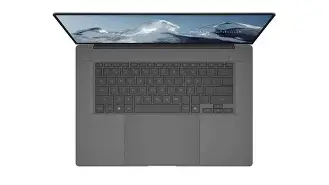
Asus tends to tune Zenbook keyboards for comfortable long-form typing, and the larger A16 benefits from a roomier layout with more palm rest space. The 14-inch model still offers good key travel and feedback but can feel more compact. Trackpads across both lines generally use glass or high-quality plastic surfaces with reliable drivers and gesture support.
Ergonomics that influence daily comfort include hinge tilt (some Zenbooks slightly elevate the rear for a typing angle), key travel, spacing, and power button placement. Buyers who produce large volumes of text may prefer the A16's more generous deck area.
Upgradability and serviceability
Ultraportable laptops, including the Zenbook A-series, tend to be limited in upgradability. RAM is often soldered to the motherboard in many configurations, while storage (NVMe SSD) may remain user-replaceable. The 2026 refresh may encourage slightly easier service access for common repairs, but buyers should not expect major internal upgrades. For longevity, selecting the highest practical RAM and storage at purchase is recommended for users who plan to keep the device several years.
Price and perceived value
Value is context-dependent. The 2026 A14/A16 models command higher initial prices for newer platforms and feature updates but deliver value through improved battery life, future-proofing, and potential warranty improvements. The older A16 can present better immediate value when discounted or available in refurbished channels, especially for users who prioritize screen size over having the very latest silicon.
Comparison table
| Category | Asus Zenbook A14/A16 2026 | Asus Zenbook A16 (earlier) |
|---|---|---|
| Typical screen sizes | 14-inch and 16-inch options (A14 and A16 variants) | 16-inch main model |
| Processor | Latest mobile CPUs at time of 2026 refresh; emphasis on efficiency | Previous-generation mobile CPUs; higher TDP options available |
| Graphics | Integrated GPUs; optional entry discrete GPUs depending on SKU | Integrated and optional discrete GPU configurations |
| Battery | Optimized efficiency; runtime depends on configuration | Larger battery possible in 16-inch chassis; runtime varies |
| Ports | Balanced modern selection; Thunderbolt/USB-C focus | Often slightly wider port selection on bigger chassis |
| Weight & portability | Typically lighter and thinner for same screen size | Heavier due to older platform and larger screen |
| Upgradeability | Limited (RAM often soldered); SSD may be replaceable | Similar constraints; depends on exact SKU |
| Price | Higher at launch; better long-term value for platform longevity | Can be better value when discounted; lower entry price on used market |
Pros & cons
Asus Zenbook A14/A16 2026 — Pros
- Updated platform with improved power efficiency and longevity
- Likely incremental improvements in thermals and battery management
- Slimmer, lighter chassis for better portability (especially the A14)
- Modern connectivity standards out of the box
- Good choice for buyers who keep devices 3+ years
Asus Zenbook A14/A16 2026 — Cons
- Higher launch price compared with older generation discounts
- Limited upgradeability typical of ultraportables
- Smaller models sacrifice screen real estate for portability
Asus Zenbook A16 (earlier) — Pros
- Larger screen suited to productivity and creative work
- Often available at competitive prices or as refurbished bargains
- Comfortable keyboard and larger palm rest for long typing sessions
- Configurations with higher TDP CPUs may favor short bursts of heavy compute
Asus Zenbook A16 (earlier) — Cons
- Less efficient platform compared to refreshed 2026 models
- Potentially heavier and thicker than refreshed equivalents
- Older wireless standards and fewer longevity guarantees
Buying guide: how to choose the right Zenbook
Buyers should start from intended use and then match features to needs. The following checklist helps prioritize the most important configuration decisions.
Looking for the best Laptops & Computers deals on Amazon?
View Offers →1. Define primary use
- Frequent travelers / students: Prioritize portability, battery life, and durable build. A14 (2026) or a lightweight A16 2026 configuration is recommended.
- Creative professionals: Prioritize screen size, color accuracy, and GPU options. A16 with a color-accurate panel is preferable.
- Developers and multitaskers: Prioritize RAM and CPU cores; select the highest RAM configuration available and prefer SSD capacity to avoid external drives.
- Video editors / content creators: Prioritize a higher-TDP CPU, discrete GPU, and an accurate, bright display. The larger A16 often suits these workflows.
2. Prioritize RAM and storage
Because RAM is often soldered, selecting the maximum practical RAM at purchase prevents bottlenecks later. For storage, NVMe SSDs are fast and commonly user-replaceable; select a capacity that minimizes reliance on external drives.
3. Check display options
If color-critical work is a must, choose configurations with factory-calibrated panels and wide color gamut coverage. For general productivity, a high-resolution IPS panel balances clarity and battery life; for streaming and motion-smooth UI interactions, higher refresh rates are a bonus.
4. Consider ports and dongle needs
Confirm that the laptop includes the ports necessary for the user's workflow — HDMI or DisplayPort for external monitors, full-sized USB-A if legacy peripherals are used, or an SD card reader for photographers. If those ports are missing, factor in the cost and inconvenience of dongles.

5. Evaluate real-world battery life
Look for independent battery tests or user feedback for mixed-use scenarios. Expect manufacturer claims to be optimistic; prioritize devices that offer sustained medium-load runtimes rather than peak numbers achieved in idealized tests.
6. Warranty and service
Compare warranty lengths and included service options. A newer model may come with promotions or improved support; discounted older units might include shorter warranty coverage unless refurbished with certified checks.
Configuration recommendations by buyer type
- Student/Light user: 14-inch 2026 model, 16–32GB RAM if affordable, 512GB SSD, bright IPS panel. Prioritize battery life and weight.
- Business traveler: 14-inch or 16-inch 2026 with higher battery capacity option, Thunderbolt ports, and 16–32GB RAM. Choose a model with good webcam and microphone tuning for conferencing.
- Creative professional: 16-inch (A16), color-accurate OLED or high-gamut IPS, discrete GPU if editing video, 32GB+ RAM, 1TB SSD.
- Developer/power user: 16-inch A16 or higher-TDP 2026 variant, 32GB RAM, M.2 NVMe 1TB+, prioritize cooling and keyboard comfort.
Conclusion
The question of which is the better value depends on how the buyer defines value. The Asus Zenbook A14/A16 2026 models represent the safer long-term investment: updated platform efficiency, potential improvements to thermals and battery, and design refinements that benefit daily mobility. For users who need the newest features, longer on-battery time, and lighter carrying weight, the 2026 models justify a higher price.
Conversely, the older Zenbook A16 remains compelling for buyers who prioritize display size and immediate cost savings. When available at a discount — or for buyers content with a previous-generation platform — the A16 can deliver strong productivity per dollar, especially for spreadsheet-heavy work, multimedia consumption, or content editing on a larger canvas.
Ultimately, buyers should weigh portability versus screen real estate, confirm the RAM/storage configuration for future-proofing, and pick the model whose strengths align with their real-world workflows. For users who plan to keep a laptop for many years and value battery life and future compatibility, the A14/A16 2026 is often the better long-term value. For buyers focused on a roomy workspace at a lower upfront cost, the earlier A16 still offers clear advantages.