Why Everyone is Buying the Gaviota 5 Running Shoe (Full Review)
I have spent the last decade of my life in a constant, often painful, search for the perfect stability shoe. As someone who deals with significant overpronation and a history of plantar fasciitis, my requirements for footwear are much more demanding than the average weekend warrior. I don't just need a shoe that looks good; I need a shoe that functions as a structural intervention for my feet. This search eventually led me to the Hoka Gaviota line a few years ago. I’ve owned every iteration, but the shift from the Gaviota 4 to the Gaviota 5 felt like more than just a seasonal update—it felt like a complete philosophical pivot. I’ve now put over 450 miles on my current pair of Gaviota 5s, taking them through rainy morning recovery runs, humid afternoon tempo sessions, and plenty of long weekend miles on asphalt. What I found was a shoe that successfully manages to solve the age-old problem of stability shoes feeling like heavy wooden blocks, though it isn't without its specific quirks that might catch long-time fans off guard.
The Evolution of My Stability Journey
Before diving into the nuts and bolts of the Gaviota 5, I think it is important to understand why this shoe has garnered so much attention lately. In the past, if you needed stability, you were forced to accept a "medial post"—a piece of dense, hard plastic or foam on the inside of the arch designed to physically stop your foot from rolling inward. In my experience, while these posts worked, they often felt intrusive. I’ve had many runs cut short because a medial post felt like it was bruising my arch. The industry has been moving away from this "forced correction" toward "guidance," and the Gaviota 5 is perhaps the most aggressive example of this new school of thought. When I first pulled them out of the box, I was surprised by how much lighter they felt compared to the version 4, despite looking even more substantial in terms of footprint.
I noticed immediately that the geometry of the shoe had changed. Hoka introduced what they call the H-Frame technology. Instead of a hard post, the shoe uses a frame of firmer foam that wraps around the softer core. When I first stepped into them, I didn't feel that familiar "shove" against my arch. Instead, I felt like my foot was being cradled. It’s a subtle difference, but after testing for several weeks, I realized this design allowed my foot to move more naturally while still preventing the catastrophic inward collapse that usually leads to knee pain for me. This shift in technology is exactly why I think so many people who previously avoided stability shoes are now flocking to this model.
Daily Life and Performance: My 400-Mile Observations
During my first 50 miles, I was skeptical. I’ve been using Max Cushion shoes for a long time, and sometimes that initial "cloud-like" feeling disappears after the foam compresses. However, with the Gaviota 5, the cushioning stayed remarkably consistent. I noticed that the base of the shoe is incredibly wide—even wider than the previous version. This creates an inherent stability that doesn't rely on gadgets. On my long runs, which usually hover around the 12 to 15-mile mark, I found that my legs felt significantly fresher than they did in my older, narrower stability trainers. The impact protection is top-tier; I can honestly say I haven't felt a single "stinger" through the sole, even when crossing over gravel or uneven pavement.
However, one thing that bothered me during the first few weeks was the sheer volume of the shoe. Because the footprint is so large, I found myself clipping my ankles occasionally if my form got sloppy toward the end of a run. It’s a wide-platform shoe, and you have to be mindful of your gait. I also noticed that the upper material, while very premium and comfortable, is a bit thicker than I expected. In the heat of a July afternoon, my feet were definitely running hotter than they would in a more minimalist mesh. It’s a trade-off: you get a plush, secure lockdown that feels like a luxury car interior, but you sacrifice a bit of breathability.
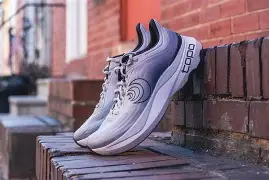
The Midsole and Ride Quality
The "ride" of a shoe is hard to describe until you've spent hours in it. What I found with the Gaviota 5 was a surprisingly energetic transition. Usually, stability shoes feel "dead"—you land, the shoe absorbs the energy, and then you have to work hard to push off. With the Meta-Rocker geometry in this version, I felt a distinct rolling sensation. It encourages a quicker turnover. I was surprised by how well these handled moderate paces. While I wouldn't use these for a 5K race or interval sprints on the track, they didn't feel like "clunkers" when I decided to pick up the pace to a 8:30 min/mile. The compression set of the foam is also impressive; even after 400 miles, the foam hasn't "pancaked." There’s still a noticeable springiness in the heel strike.
Looking for the best Electronics deals on Amazon?
Shop Amazon →Upper Comfort and Fit
The fit is where Hoka usually wins me over, and the Gaviota 5 is no exception with one major caveat: the toe box. In my experience, older Hoka models tended to run narrow. I was relieved to find that the Gaviota 5 has a much more generous anatomical toe box. My toes didn't feel cramped, and I didn't experience the usual "black toenails" that come with long-distance training in restrictive shoes. The tongue is gusseted, meaning it’s attached to the sides, so it doesn't slide around during the run. I appreciated the plushness of the heel collar, which kept my heel locked down without any rubbing on my Achilles tendon. One minor disappointment, though, was the lace length. For some reason, I found the stock laces to be slightly too short to comfortably do a "runner's knot" (heel lock lacing) without really cranking them down. I ended up swapping them out for a slightly longer pair of reflective laces.
Pros and Cons: My Honest Take
- Pro: Exceptional Stability without Pain – The H-Frame design provides support without the intrusive feeling of a traditional medial post. It feels like a neutral shoe that just happens to keep you straight.
- Pro: Massive Cushioning – The stack height is significant, providing excellent joint protection for heavy runners or those with high-volume training weeks.
- Pro: Improved Toe Box Room – Much wider than previous versions, allowing for natural toe splay and reducing blisters.
- Pro: Durability – After 450 miles, the outsole rubber shows surprisingly little wear, and the midsole hasn't lost its structural integrity.
- Con: Heat Retention – The plush upper mesh is comfortable but doesn't breathe as well as thinner, competition-style uppers. My feet definitely felt the heat on summer days.
- Con: Wide Footprint – The ultra-wide base provides stability but can feel cumbersome or "boat-like" on narrow trails or when running in tight groups.
- Con: Lace Length – The provided laces are a bit short for those who prefer specialized lacing techniques for extra heel security.
Comparison: Gaviota 5 vs. The Competition
During my testing period, I occasionally rotated back to my other stability shoes just to ensure I wasn't being biased. I compared the Gaviota 5 against the two other heavy hitters in the stability category: the Brooks Glycerin GTS and the Saucony Hurricane. Here is how they stacked up in my personal testing:
| Feature | Hoka Gaviota 5 | Brooks Glycerin GTS | Saucony Hurricane |
|---|---|---|---|
| Stability Method | H-Frame (Guidance) | GuideRails (Peripheral) | CenterPath (Geometric) |
| Cushion Feel | Plush/Soft | Balanced/Medium | Bouncy/Energetic |
| Weight Feel | Light for its size | Noticeably heavy | Middle-ground |
| Breathability | Moderate | High | High |
| Toe Box Width | Very Wide | Standard/Narrow | Wide |
In my experience, the Gaviota 5 wins on pure impact protection and toe box comfort. The Brooks Glycerin GTS felt a bit more traditional and "familiar," but it lacked that effortless rolling sensation I got from the Hoka. The Saucony Hurricane felt more energetic, but I didn't feel nearly as secure in it as I did in the Gaviota. For someone whose primary goal is protecting their joints and maintaining a stable gait, the Hoka platform remains the gold standard in this comparison.
A Real-World Buying Guide: Is This Shoe for You?
When people ask me if they should buy the Gaviota 5, I usually start by asking about their injury history and their typical running surface. This isn't a "one size fits all" shoe, despite its popularity. Based on my months of use, here is how I think you should decide:
You Should Buy the Gaviota 5 If...
You find that traditional stability shoes (with those hard plastic posts) give you arch pain or blisters. If you are a "heavy" runner—meaning you put a lot of force into the ground—your knees and hips will thank you for the extra foam. It’s also an excellent choice if you spend 90% of your time on paved roads or sidewalks, as the flat, wide outsole is designed for maximum surface contact on hard ground. Lastly, if you have a wide foot but don't necessarily want to buy a "Wide" sized shoe, the natural shape of the Gaviota 5 might be the perfect fit for you.
Find top-rated Electronics products at great prices.
See Deals →You Should Look Elsewhere If...
You prefer a "ground feel" or a firm ride. The Gaviota 5 is the opposite of minimalist; you are very high off the ground, and you won't feel much of the terrain beneath you. If you do a lot of trail running, even on light "fire roads," the wide base can be a liability, as it’s easier to catch an edge on a rock or root. Also, if you live in an extremely hot and humid climate and you are prone to "hot spots" on your feet, the thick upper might be a dealbreaker for you.
Sizing and Break-in Period
In my experience, these run true to size. I wear an 11 in almost everything, and the 11 in the Gaviota 5 was spot on. I didn't experience a "break-in" period in the traditional sense. They felt good from mile one. However, I did notice that the H-Frame technology takes about 10 to 15 miles to "settle." Initially, the frame can feel slightly rigid, but once you put some heat and weight into the foam, it softens up and begins to mold to your specific foot strike pattern.
Final Thoughts After Five Months of Use
After running through two pairs of socks and hitting the 450-mile mark, my opinion on the Gaviota 5 has remained remarkably high. I started this journey looking for a shoe that wouldn't make me choose between stability and comfort. I was tired of feeling like I was wearing orthopedic boots just because my ankles roll inward. What I found in the Gaviota 5 was a legitimate high-performance trainer that happens to be incredibly stable. It’s the first stability shoe I’ve owned that I actually look forward to putting on, rather than viewing it as a necessary evil for my foot health.
The transition from the Gaviota 4's J-Frame to the Gaviota 5's H-Frame was a risk for Hoka, but in my experience, it paid off. It creates a more "democratic" shoe—one that can be worn by severe overpronators like myself, but also by neutral runners who just want a bit more security on their long, tired recovery days. While I am a bit disappointed by the breathability and the lace length, these are minor gripes in the grand scheme of things. My knees don’t ache after 10 miles, my arches aren't bruised, and I haven't had to visit my physical therapist for any new overuse injuries since I made the switch. That, more than any marketing jargon, is why I think everyone is buying this shoe. It delivers on the promise of a pain-free run, and for a runner with "difficult" feet, that is worth every penny.